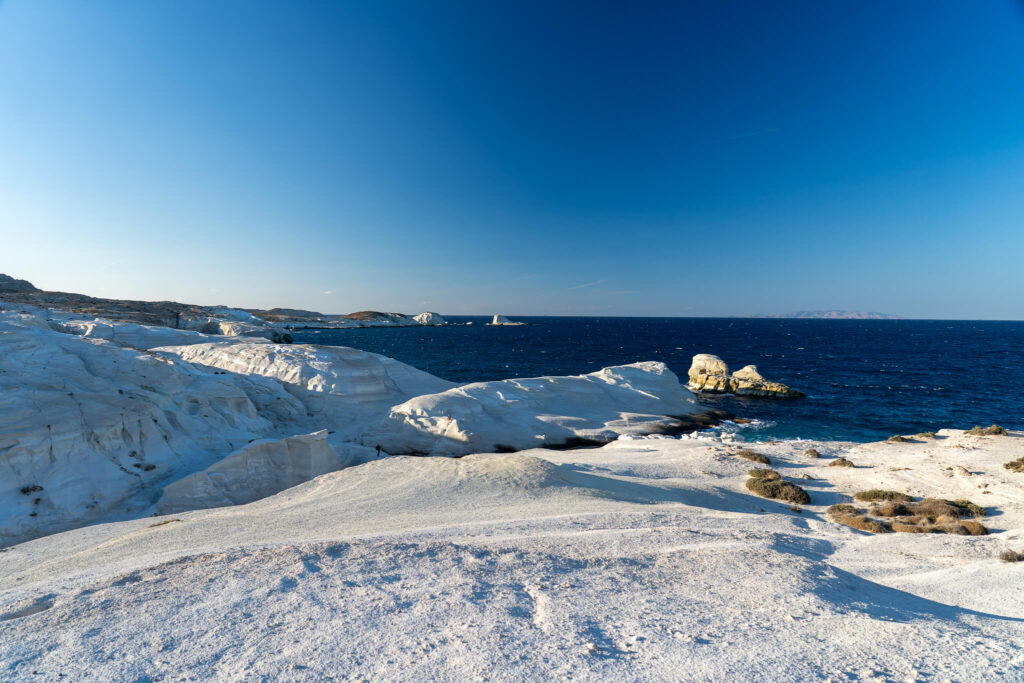
We came in search of castles.
Not the kind hidden behind velvet ropes or sealed in glass. But the kind that still breathe, with cracked stones warmed by the sun, arches echoing with footsteps, and walls thick with stories of warriors, wanderers, and whispered revenge.
In the Peloponnese, you don’t chase fairy tales. You walk right into them.
Here, the medieval lives on. Not in staged performances or souvenir shops, but in the curve of an ancient bastion, the clang of a shutter in the wind, the hush of a chapel forgotten in time. This southern realm of Greece is no stranger to empires. Byzantines, Franks, Venetians, Ottomans, all carved their dreams into its hills. And their castles, still scattered like watchful sentinels, speak in many tongues.
It begins at the heights of Akrocorinth, where legend says Sisyphus bargained with the gods for water. And won. His prize? A stronghold laced with springs and shadowed by centuries. Each stone here tells a different story: ancient, Byzantine, Ottoman. All stacked upon one another like memories that refuse to fade.
From there, the road winds toward elegance and defiance.
Nafplio greets you with neoclassical charm and a gaze fixed firmly upward – to Palamidi Fortress, that great Venetian crown on the hill. They say there are 999 steps to reach the summit, and each one unveils a new view: of tiled rooftops, sea-soaked harbors, and distant hills draped in myth. Revolutionaries stormed it. Prisoners prayed within it. Travelers now ascend to feel, not just to see.
Below, afloat like a sentinel in the Argolic Gulf, lies Bourtzi. The island fortress that once guarded Nafplio’s port. When dusk falls, and the stones glow amber in the fading light, it’s easy to imagine a torchlit boat gliding across the waters, or a secret signal from the watchtower.
And then the road south twists toward the sea, and romance.
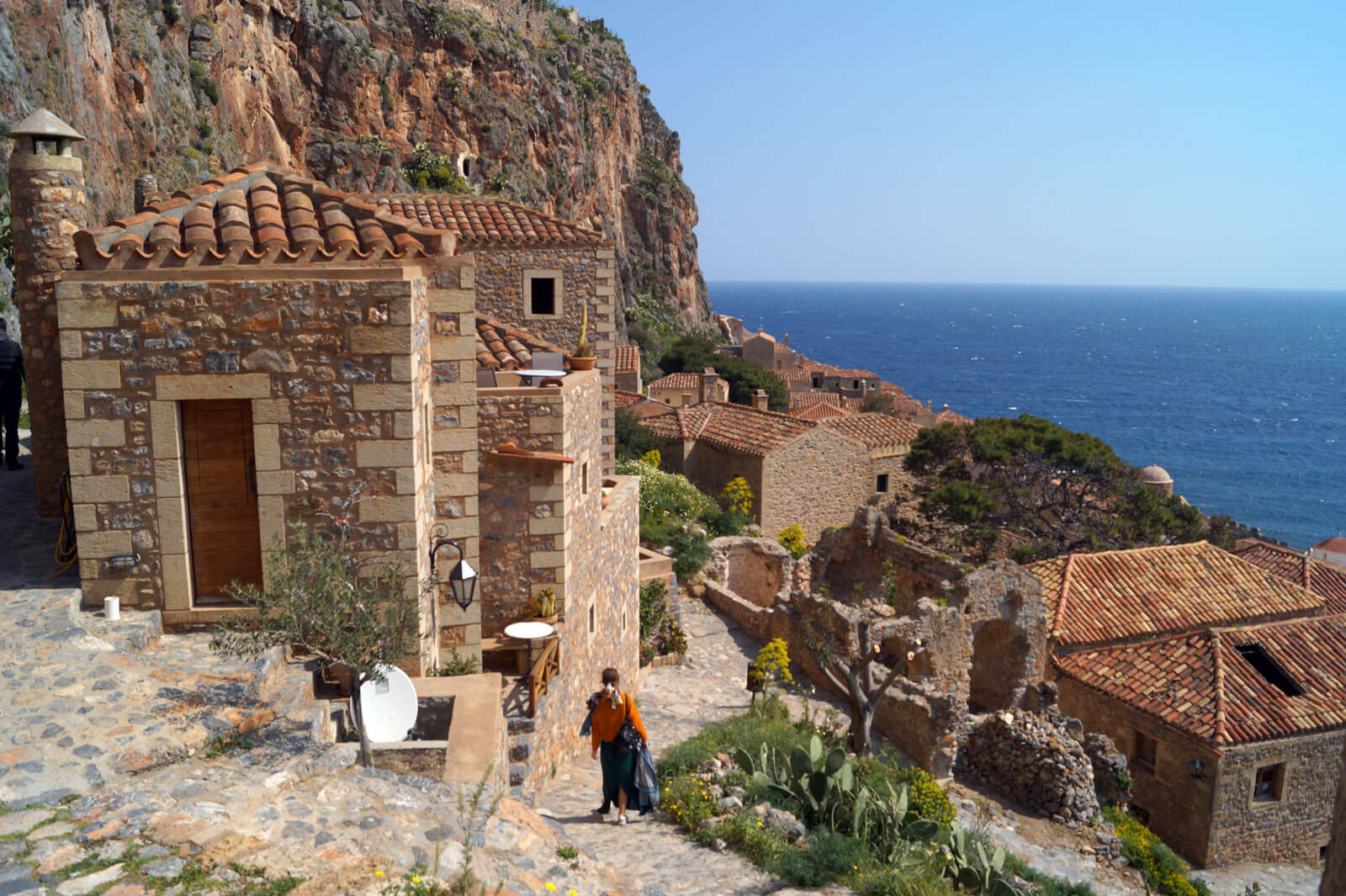
Monemvasia rises like a mirage from the Aegean. A fortress isle tethered to the mainland by a causeway and a legend. Within its walls, time slows. Bougainvillea spills from balconies. Footsteps echo on worn cobblestones. It’s not hard to imagine a cloaked figure slipping through the alleys, or a candle flickering behind a shutter. Lovers come here to get lost. And sometimes, to find something deeper.
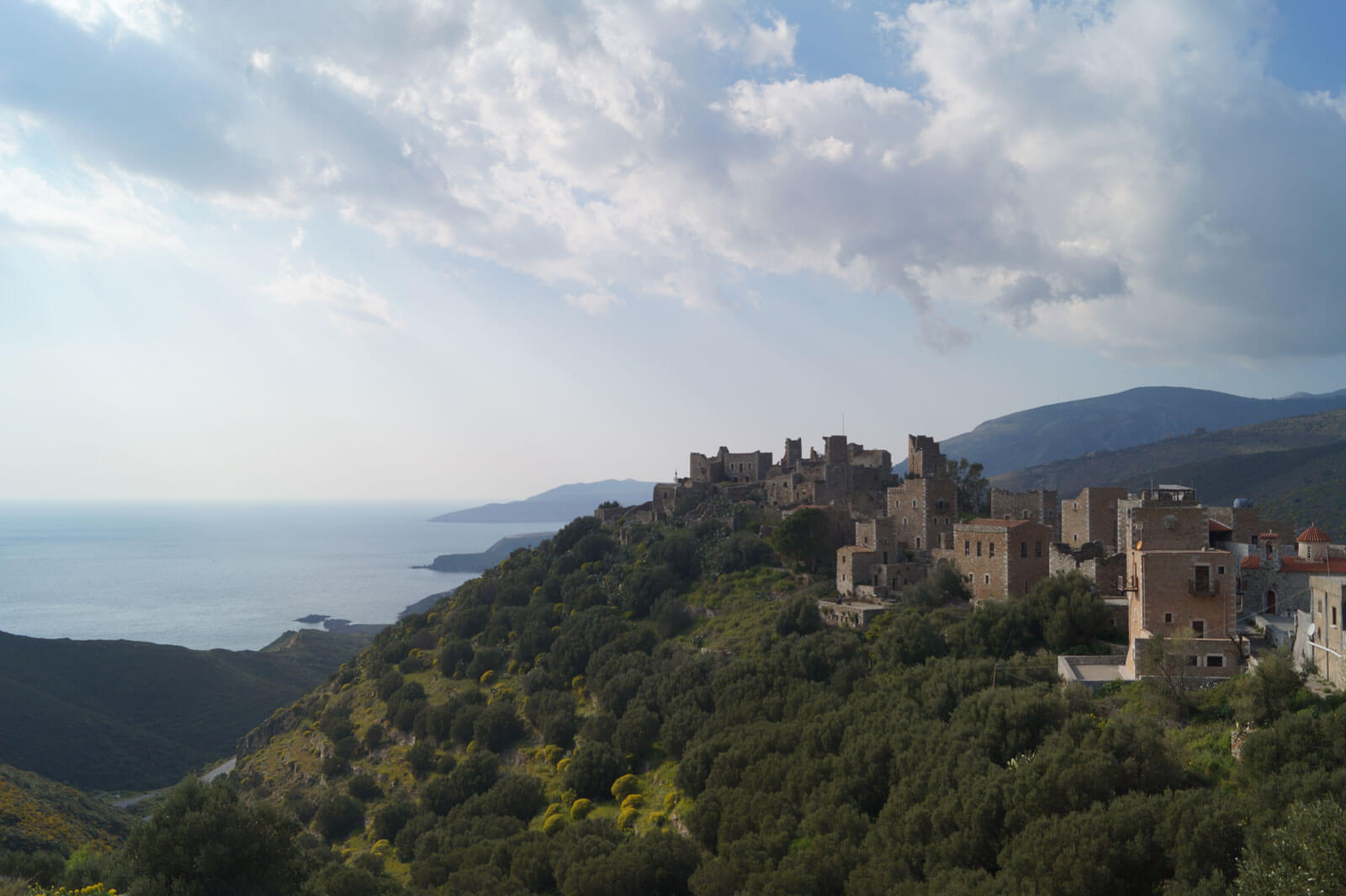
And then, deeper into the Mani, the land turns raw and windswept. And suddenly, Vatheia appears. Perched atop a ridge like a dream half-remembered, this castletown of tower houses rises from the earth like a village of sentinels. Stone upon stone, these tall, narrow homes once guarded clan secrets and blood feuds, their slits and shadows watching every path below. Today, many stand silent, their shutters askew, wild herbs brushing their thresholds. But step closer, and you’ll feel it: the hush of long-held memory, the pride of a people who carved lives into unforgiving rock. There is no drawbridge here, no crowned gate. Just silence, sea breeze, and the sense that something eternal once happened… and never quite left.
At Rio, where bridge meets sea and the wind carries salt and memory, another kind of castle waits. Ottoman walls guard the narrows like outstretched arms, one on each shore. They say not even a bird could pass unseen between them. Today, the moat still glimmers with seawater, and the stones still hold the silence of sieges long past.
Pylos, gentle and green, hides its own fortress: Niokastro! The “new” castle of the old empire. Built after the Ottoman fleet’s first great fall, it clings to the shore like a second chance. Inside, whitewashed chapels and sunlit courtyards wait for those who wander slowly. Time, here, is generous.
And then, like stepping into a storybook, you reach Koroni and Methoni, sisters in stone, anchored at the edge of the Messinian Gulf. In Koroni, the path climbs gently past chapels and carved tombs, through olive-scented air and monastery walls still echoing with chants. Few live inside the castle now. Fewer still remember when pirates once scaled these heights.
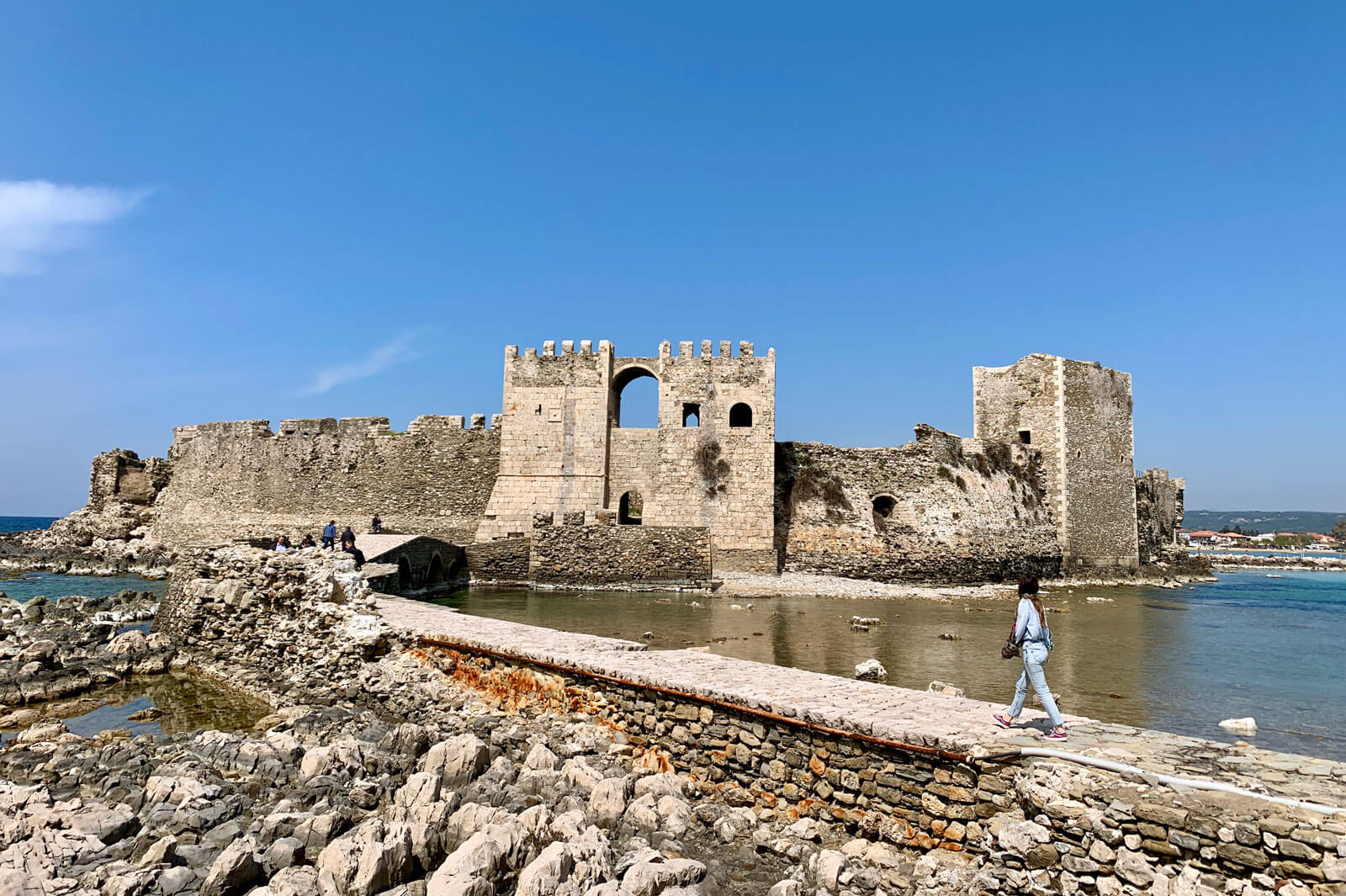
But Methoni… ah, Methoni. If ever a castle were built for a painter’s eye, it is this one. Vast, sun-drenched, and lapped by three sides of sea, its gate alone is a masterpiece. Beyond it, you’ll find lions of Venice carved in stone, vaulted cisterns, Turkish baths, and the haunting Bourtzi tower; once a prison, now a lighthouse for dreams. They say that when the wind is just right, the ghosts still whisper through its halls.
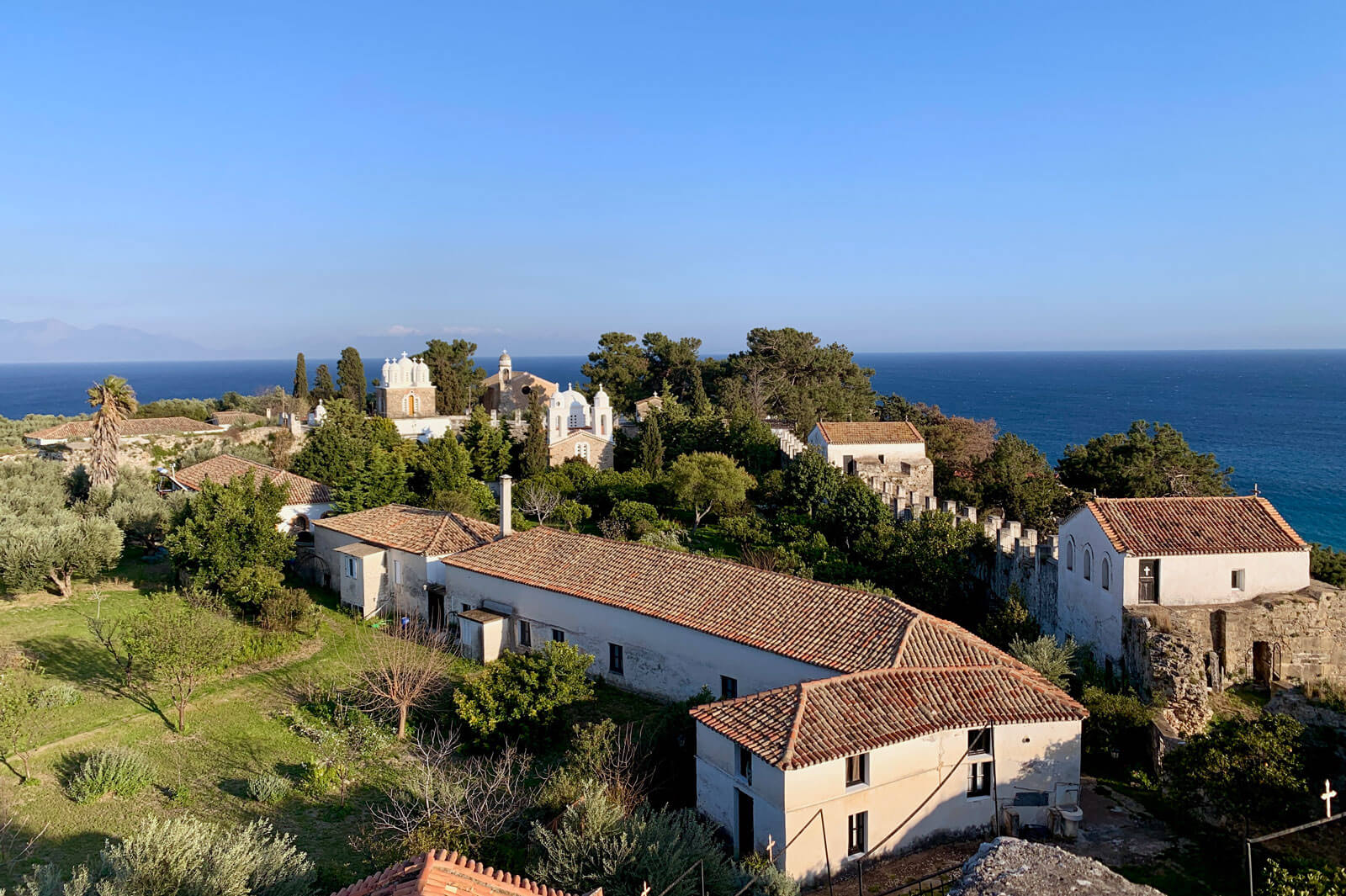
We chased castles. But what we found was something older, and more enduring.
In the Peloponnese, myths wear masonry. History is carved in arches and echoed in wells. And romance -true, lasting romance- isn’t just a feeling. It’s a place. A land of Lords and Ladies, legends and lamplight, stone steps and sea winds. A land that doesn’t just invite you to explore, but to imagine.
And when you leave, you’ll find yourself glancing back, half-expecting to see a knight on horseback, or a woman in a scarlet cloak, waiting at the gate.
Because some stories don’t end when the page turns. They linger.
And the Peloponnese? It’s waiting to be remembered.
@Photography by the Anamnesis team.